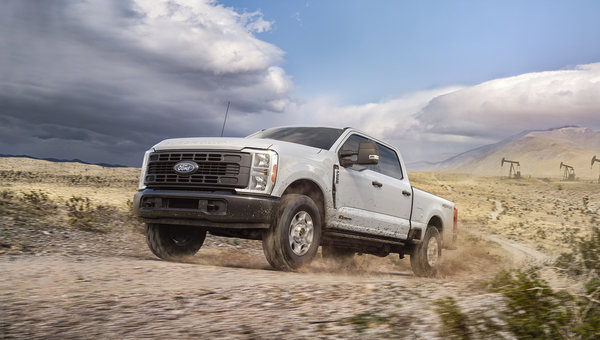
The True Cost of Waiting: How Fleet Upfitting Delays Drain Your Bottom Line
January 30 2026,

Fleet managers and business owners across British Columbia face a challenge that extends beyond the initial purchase price of commercial vehicles. While negotiating the best deal on a new Ford Transit van or F-550 Super Duty remains important, the financial drain of upfitting delays has emerged as a margin killer in today's commercial vehicle landscape.
Industry conditions have fundamentally altered timelines. What once took two to four weeks now stretches into three months, transforming vehicle acquisition from a straightforward capital investment into a complex waiting game that directly impacts profitability. For companies operating in British Columbia's logistics, construction, and trades sectors, these delays threaten operational efficiency and competitive positioning.
Understanding the New Reality of Upfitting Timelines
The commercial vehicle upfitting process involves customizing trucks and vans after manufacture to meet specific business requirements. For Ford commercial vehicles, this typically includes installing cargo management systems, electrical integrations for specialized tools, lift gates, or refrigeration units through Ford's certified Upfit Program.
Supply chain disruptions affecting semiconductors, steel, and specialized components have extended standard upfitting from the traditional two-to-four-week window to eight-to-twelve-week averages across Canada. British Columbia faces additional challenges due to port logistics at Vancouver and shortages in skilled trades workers capable of performing complex electrical and mechanical integrations.
Quantifying the Financial Impact of Three-Month Delays
Direct Revenue Loss
Every day a commercial vehicle sits idle waiting for upfitting equals lost earning potential. Average daily revenue figures for commercial trucks and vans operating in the province range from $450 to $800, depending on application and utilization rates. For customized Transit vans serving trades and service industries, conservative estimates place daily revenue potential at $300 to $500.
A 90-day upfitting delay translates to:
- Single vehicle impact: $27,000 to $72,000 in lost revenue
- Ten-vehicle fleet impact: $270,000 to $720,000 in foregone earnings
- Margin erosion: Sufficient to eliminate annual profitability for many small-to-medium commercial operators
At a Glance: The Hidden Costs of Upfitting Delays
|
Cost Category |
30-Day Delay |
90-Day Delay |
|
Lost Revenue (per vehicle) |
$9,000 - $24,000 |
$27,000 - $72,000 |
|
Interest on Idle Capital |
$400 - $570 |
$1,200 - $1,700 |
|
Unproductive Labour (2-person crew) |
$3,000 - $4,200 |
$9,000 - $12,600 |
|
Rental Vehicle Costs |
$6,000 - $12,000 |
$18,000 - $36,000 |
|
Total Impact Range |
$18,400 - $40,770 |
$55,200 - $122,300 |
Capital and Cash Flow Implications
Vehicle purchases require substantial capital outlays. A new Ford F-150 configured for contractor applications costs $55,000 to $75,000 including upfitting. At current commercial loan rates of seven to nine percent in British Columbia, a 90-day delay adds $1,200 to $1,700 in interest charges per vehicle without generating any return on investment.
Labour costs compound these financial pressures. Tradespeople and commercial drivers in British Columbia earn $25 to $35 per hour on average. A two-person crew waiting on an upfitted vehicle equals $9,000 to $12,600 in monthly payroll expenses without productive output - directly eroding gross margins by 10 to 15 percent.
British Columbia's Unique Amplifying Factors
Geographic and Regulatory Challenges
The province's rugged terrain and remote work sites make vehicle downtime particularly costly. Regulatory compliance adds complexity to timelines. All upfitting work must satisfy Transport Canada's Canadian Motor Vehicle Safety Standards, adding two to four weeks for required inspections and certifications.
British Columbia's zero-emission vehicle mandates for public fleets by 2030 create additional pressure for rapid electrification upfitting, yet component shortages for Ford's E-Transit van upfit kits currently extend to 60-to-90-day backlogs.
Local Market Pressures
Port disruptions at Vancouver during 2024 added delays to import timelines for automotive components. Commercial vehicle insurance rate increases further compound expenses during waiting periods, while businesses face competitive vulnerabilities when contracts requiring immediate vehicle deployment go to competitors with operational capacity.
Strategic Solutions to Minimize Delay Impacts
Prioritize Upfitters with Proven Turnaround Times
Ford Pro-certified upfitters in British Columbia offering expedited timelines can deliver standard trades customizations in one-to-two-week windows rather than three-month delays. Mobile service capabilities reduce downtime by 50 percent according to Ford's operational metrics, providing critical advantages for fleet managers prioritizing uptime.
Leverage Pre-Configured Upfit Packages
Rather than fully custom specifications requiring extended lead times, pre-configured upfit packages for common applications - such as shelving systems, tool storage, and basic electrical integrations - deliver faster deployment. These standardized solutions typically cost $3,000 to $5,000 and generate return on investment within six-to-nine months through efficiency improvements.
Integrate Fleet Management Technology During Upfitting
Installing FordPass Pro fleet management software during the upfitting process - at costs of $500 to $1,000 - enables real-time vehicle tracking and performance monitoring. This technology integration provides immediate visibility into vehicle status and deployment readiness.
Plan Acquisitions with Buffer Timelines
Conservative planning that incorporates realistic 90-day upfitting timelines prevents operational disruptions. Staggered vehicle replacement schedules ensure continuous operational capacity even when individual vehicles face delays. This approach transforms upfitting from a crisis management issue into a predictable component of fleet planning.
Which Approach Fits Your Operation?
Fleet managers must evaluate upfitting strategies based on specific operational requirements:
High-Volume, Standard Applications: Businesses deploying multiple vehicles with similar configurations benefit most from pre-configured packages and established upfitter relationships. The efficiency gains and reduced per-vehicle costs justify standardization.
Specialized Requirements: Operations requiring unique integrations - such as refrigeration, specialized tool storage, or industry-specific equipment - should factor extended timelines into acquisition planning and consider phased deployment strategies.
Electrification Priorities: Companies pursuing zero-emission fleet transitions need partners experienced with EV-specific upfitting challenges, including charging infrastructure integration and battery management system compatibility.
Growth-Stage Businesses: Rapidly expanding operations benefit from flexible upfitting partnerships capable of scaling quickly while maintaining quality standards and reasonable timelines.
Take Control of Your Fleet Deployment Timeline
The financial impact of three-month upfitting delays extends beyond inconvenience - it directly erodes profitability through lost revenue, idle capital costs, and competitive disadvantages. For British Columbia fleet managers and business owners, understanding these true costs transforms vehicle acquisition from a simple purchasing decision into a strategic operational priority.
Successful fleet management in today's environment requires partnerships with upfitting providers who understand the margin implications of every delayed day. By prioritizing proven turnaround times, leveraging standardized solutions where appropriate, and planning conservatively for realistic timelines, businesses can minimize the financial drain that kills margins.
Contact our commercial vehicle specialists at Ford Fleet Pro to discuss expedited upfitting solutions that keep your fleet operational and your margins intact. Our team understands the unique challenges facing British Columbia businesses and delivers the turnaround times your operation demands.