Fleet EV Readiness in BC: Should Your Business Consider the Ford E-Transit in 2026?
April 17 2026,
British Columbia's commercial fleet electrification conversation has moved from theoretical to operational. The CleanBC roadmap requires public sector fleets to transition to zero-emission vehicles by 2030, and private sector operators face increasing pressure from municipal clients, procurement requirements, and rising fuel costs to demonstrate a credible electrification path. The question for most Surrey and Lower Mainland businesses is no longer whether to consider EVs — it's which vehicles make financial sense right now.
The 2026 Ford E-Transit is one of the most practical entry points into commercial fleet electrification available today. Here's how to evaluate whether it fits your operation.
What the 2026 E-Transit Delivers
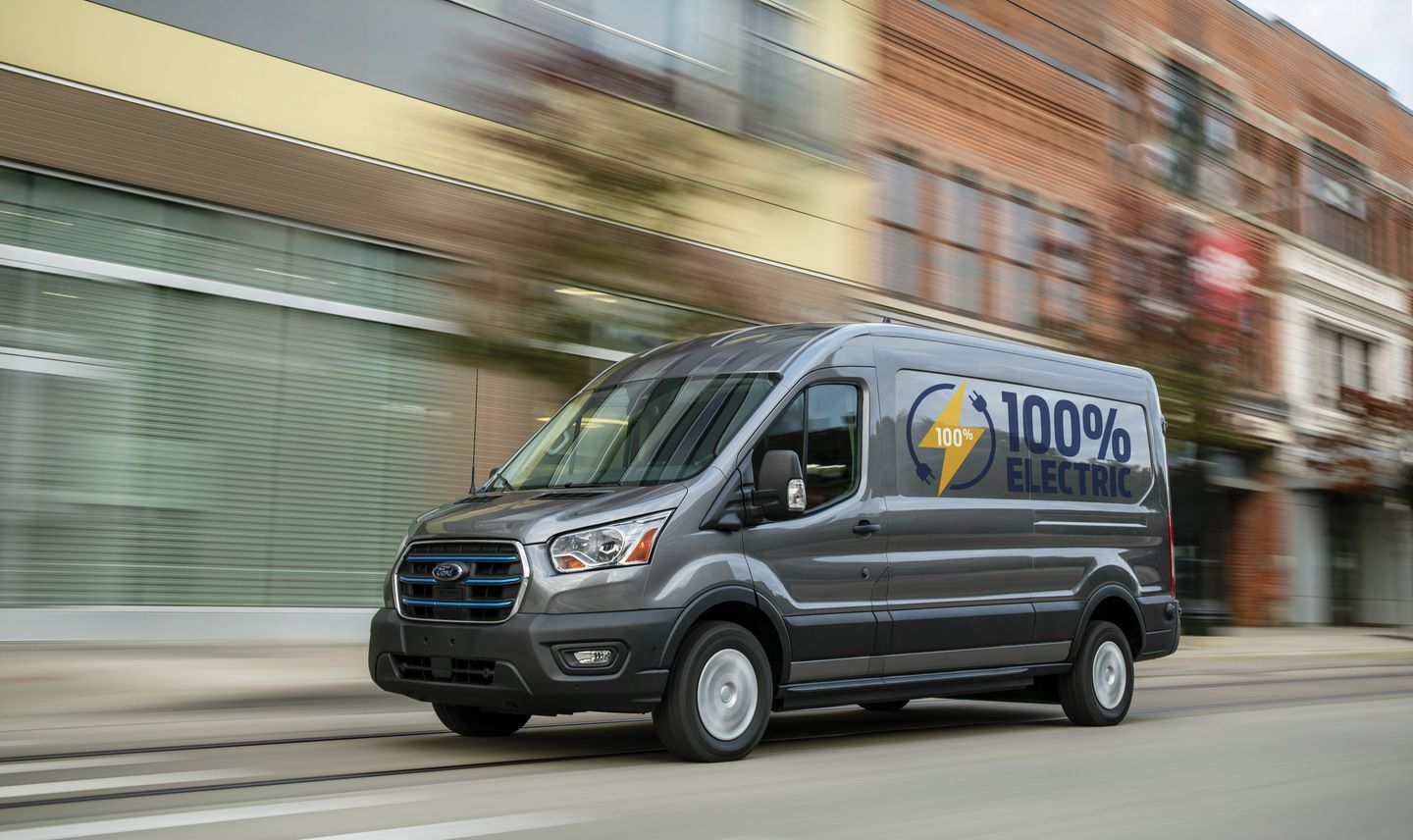
The E-Transit is the fully electric version of Ford's full-size Transit cargo van — the same body, the same cargo dimensions, the same upfitting compatibility, but powered by a 266-horsepower electric motor drawing from an 89 kWh lithium-ion battery.
Key performance figures for BC fleet planners:
|
Spec |
2026 Ford E-Transit |
|---|---|
|
Claimed Range |
255 km |
|
Motor Output |
266 hp / 317 lb-ft torque |
|
DC Fast Charge (180 kW) |
+108 km in 15 minutes |
|
Level 2 Charge (0–100%) |
~6 hours |
|
Cargo Volume (High Roof) |
Up to 487 cu ft |
|
Max Payload |
Up to 1,814 kg (3,999 lbs) |
The E-Transit is available in the same body configurations as the gas Transit — Regular and Extended lengths, Low, Medium, and High roof heights — meaning existing upfit specifications largely transfer directly to the electric version.
Operating cost savings over a 5-year lease cycle:
- Fuel savings of approximately $8,000 to $12,000 per vehicle (based on BC commercial diesel and gas prices vs. BC Hydro commercial rates)
- Maintenance savings of approximately $3,000 to $5,000 per vehicle (no oil changes, fewer brake service intervals due to regenerative braking, no exhaust system maintenance)
- 5-year total savings potential per vehicle: $11,000 to $17,000
Where the E-Transit Makes Sense Today

The E-Transit is the right fit for BC operations where:
- Daily routes are under 200 km — Last-mile delivery, multi-stop service routes in Surrey, Langley, Burnaby, and Vancouver, and fixed-route courier runs are ideal applications
- Vehicles return to a depot or fixed location nightly — Overnight Level 2 charging at a fleet yard or shop is the lowest-cost and most operationally simple charging model
- Cargo capacity matters more than towing — The E-Transit is not rated for towing; operations that regularly require trailer connections need a gas or diesel platform
- Municipal or government contracts are in play — An increasing number of Metro Vancouver procurement contracts now include sustainability scoring; operating E-Transits can be a qualifying differentiator
Where It's Not Ready Yet
Honest fleet advice means acknowledging the E-Transit's current limitations:
- Rural and remote BC routes — Range can be a genuine constraint for operations working outside Metro Vancouver, particularly in winter when battery range decreases by 15 to 25% in cold temperatures
- Heavy payload applications — If your Transit regularly operates near maximum payload, the E-Transit's weight distribution and payload ceiling may constrain operations
- No towing — This is a hard limit; any application requiring trailer connection requires a different platform
- Upfitting lead times — As noted in our January 2026 analysis, E-Transit-specific upfit components currently carry extended lead times due to component availability. Plan for 90+ day upfit windows on complex electrical integrations
Planning Your Transition
For most BC fleet operators, the practical path forward is not replacing your entire fleet with E-Transits in a single cycle. It's identifying the specific vehicles in your fleet — typically urban route vans, light delivery units, or low-mileage service vehicles — where the E-Transit's range and operating profile align cleanly with existing use patterns. Those units become your electrification pilot, generating real operational and financial data before broader fleet commitments are made.
Ford Fleet Pro works with BC businesses at every stage of this planning process — from identifying which vehicles in your current fleet are strong EV candidates, to structuring lease terms, to connecting you with BC Hydro's commercial charging infrastructure programs.
Contact Ford Fleet Pro in Surrey to assess your fleet's EV readiness and identify where the E-Transit fits — and where it doesn't.